


No more space
As demand for services continues to grow and infrastructure capacity remains limited, West Gippsland Hospital staff are increasingly frustrated by space constraints restricting service delivery.

As demand for services continues to grow and infrastructure capacity remains limited, West Gippsland Hospital staff are increasingly frustrated by space constraints restricting service delivery.
Like the wider community, staff are desperate for a new West Gippsland Hospital. The Allan government is under pressure to deliver on its 2022 election promise in today's State Government budget.
For staff, a new hospital is not about the bricks and mortar or shiny new equipment, it is largely about space - having the capacity to deliver services they know their growing community needed.
West Gippsland Healthcare Group director of medicine Holly Atkinson said the limitation was space. "It's not lack of passion, lack of drive, lack of efficiency. It's just lack of space."
Dr Atkinson also is clinical lead for the oncology unit, working closely with nurse unit manager Kiona Smith.
They share the weekly frustrations of establishing an oncology clinic, one day a week, in a space otherwise used for endoscopy.
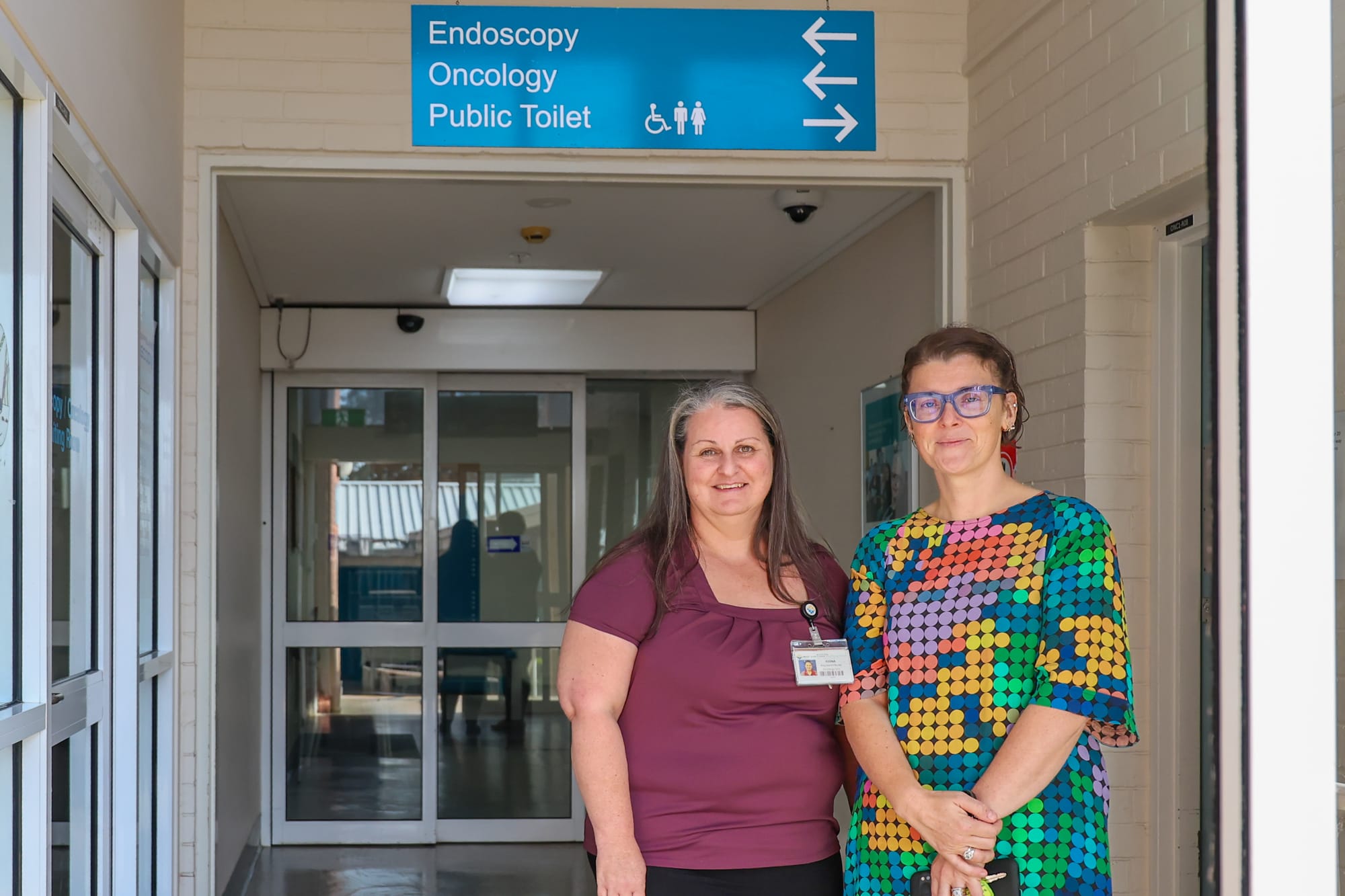
Shared service spaces across the hospital are not uncommon. But for oncology staff it means setting up and packing up the unit and finding space for all patients needing care.
"Being a one day a week unit, we don't have the luxury of delaying cancer patients from treatment if they're unwell by a couple of days and then bringing them back. We have to reschedule them for the following weeks," Ms Smith said.
"Some weeks we can have between 20 and 30 patients receiving cancer care in one day. We have 11 chairs, so it's a real juggle."
Ms Smith said the constant rotation of patients was challenging.
"We do it because the need is there, the patients need the treatment, and we just do what we have to do for the patients. If that was our family member or our best friend, we would want them to be treated in a nice, supportive, friendly environment," she said.
Dr Atkinson said nursing staff were running at peak efficiency one day a week but it was "unfortunately not enough for what the community needs" - with the clinic fully booked from start to finish.
She said a lot of work had been done to find other spaces that could be re-purposed, but because of the specific needs of oncology patients, it wasn't achievable.
Dr Atkinson said the Gippsland Regional Cancer Centre at Latrobe Regional Hospital was a purpose built facility with greater capacity for treatment compared to Warragul.
While not expecting a GRCC equivalent, Dr Atkinson said more space to provide an expanded service would go a long way to meeting needs.
Ms Smith said they had a waiting list of people who had to start their treatment at LRH because Warragul didn't have the capacity.
"It's horrible to think that there's people that have to drive past this hospital to get cancer care, when if we had the infrastructure, we could treat them here.
"We would be lucky if we could fit somebody in for their first treatment urgently within two weeks because we don't have the space.
"If we had more days we could spread the treatment days out to give them more treatment closer to home and in a timely manner," she said.
Dr Atkinson said early plans indicated a five-day purpose built cancer treatment unit would be included in the new hospital.
"I don't expect that will not be part of any future planned build...when and how that might happen again is completely up to the department," she said.
Across the hospital, Dr Atkinson said there were pressure points on staff from medical wards to midwifery and emergency.
"The challenge we have again is one of infrastructure. We have a 30 to 31 bed medical ward, that is really well supported and well staffed from a nursing perspective.
"We have a sustainable, high dependency unit with nursing staff for the first time in over a decade.
"But the problem is on any particular day, we'll have between 45 and up to 55, medical inpatients, and those patients sit in other wards because there isn't space on the medical ward.
"That unfortunately then leads to reduced capacity to things like elective surgery and patients being cared for in emergency department.
"Again, they are receiving safe and timely care, but it reduces the capacity of the emergency department to see people coming through their front door...it comes down to infrastructure and capacity," she said.
Dr Atkinson praised the ability of staff to continue providing quality care in challenging conditions.
She said feedback during accreditation last November indicated WGHG "felt like family" and "the passion that we have for providing healthcare to the community that most of us are also residents of was really, really clear."
"So that is what we all bring to work each day. But, the challenge is we'd love to come to work in a larger building.
Without certainty or a timeline, Dr Atkinson said it was difficult to ensure the healthcare group recruited, trained and retained adequate numbers of staff to grow the service into a new building.
"If we had timeframes, we would be able to start that work," she said.


